
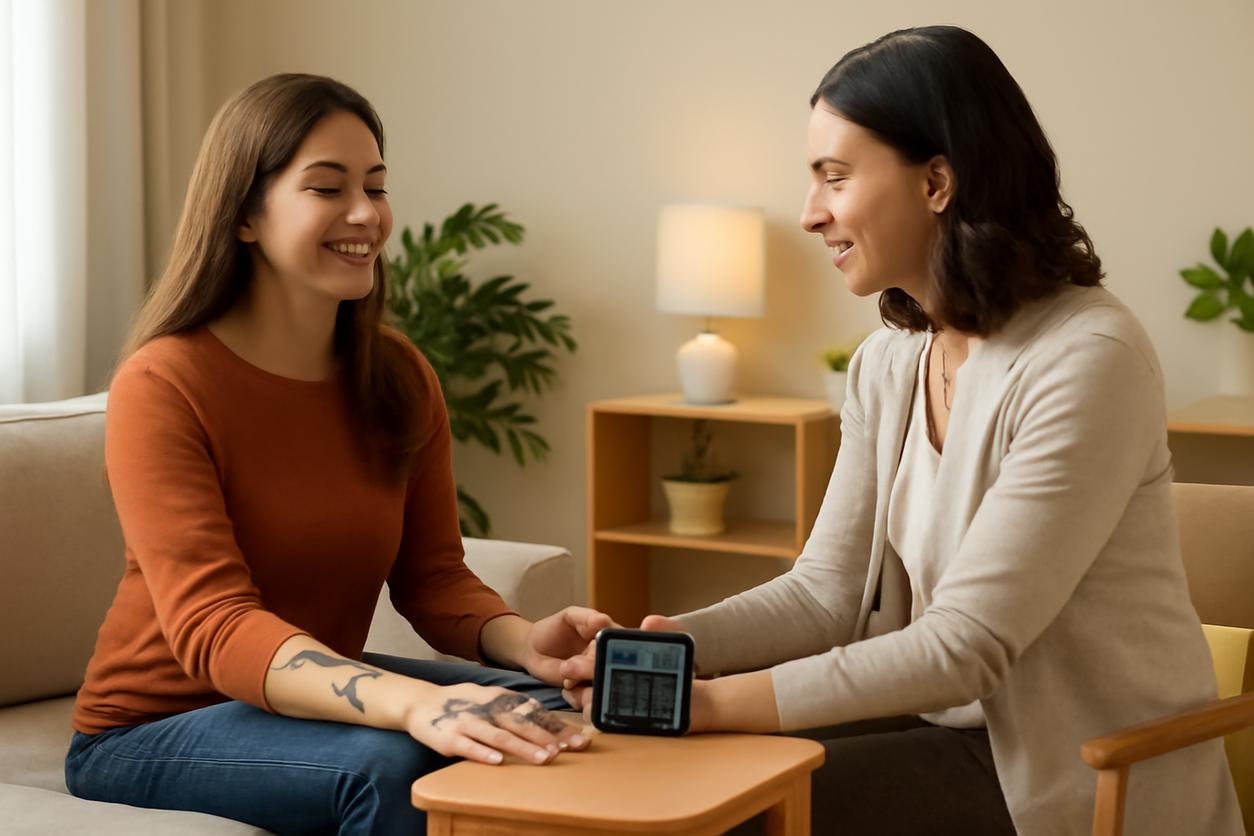
A Clinician’s Guide to Biofeedback: Integrating Physiological Self-Regulation into Modern Psychotherapy
Table of Contents
- Introduction: Why Physiological Self-Regulation Matters
- What is Biofeedback and How It Differs from Self-Monitoring
- How Biofeedback Works: Signals, Sensors, and Interpretation
- Common Biofeedback Modalities
- Evidence Synthesis: Trials, Meta-Analyses, and Clinical Relevance
- Connecting Biofeedback to CBT, ACT, and DBT Techniques
- Clinical Applications: Anxiety, Chronic Pain, and Trauma-Related Symptoms
- Session Structure: Intake, Measurement, Intervention, Homework
- Sample Session Protocol with Step-by-Step Timings
- Home Practice Guidance and Safe Device Use
- Safety, Limitations, and Contraindications
- Short Case Vignettes Illustrating Real-World Use
- Practical Tips for Clinicians Integrating Biofeedback into Therapy
- Frequently Asked Questions and Clinician Troubleshooting
- Summary and Recommended Further Reading
Introduction: Why Physiological Self-Regulation Matters
In the landscape of mental and physical wellness, the connection between mind and body is undeniable. Many clients struggle with conditions where the body’s automatic, or autonomic, nervous system is in a state of chronic dysregulation. This can manifest as anxiety, chronic pain, hypertension, or trauma-related symptoms. While traditional psychotherapy excels at addressing thoughts and behaviors, it can be challenging for clients to consciously influence physiological processes like heart rate, muscle tension, or blood pressure. This is where physiological self-regulation becomes a critical therapeutic target. The ability to voluntarily influence these automatic systems empowers clients, reduces symptoms, and builds profound resilience. Biofeedback is a primary tool for teaching and mastering this essential skill.
What is Biofeedback and How It Differs from Self-Monitoring
Biofeedback is a mind-body technique that uses electronic instruments to provide real-time information about physiological functions that are normally outside of our conscious awareness. It operates on a simple principle: by making these subtle bodily processes visible or audible, you can learn to control them. Think of it as looking in a mirror to see and correct your posture; biofeedback is a mirror for your internal state.
This is fundamentally different from self-monitoring. A smartwatch or fitness tracker might tell you your heart rate was high yesterday during a stressful meeting (self-monitoring). In contrast, a biofeedback device shows you your heart rate second-by-second and gives you immediate feedback as you use a relaxation technique, allowing you to see the direct impact of your efforts and learn how to replicate that change on command.
- Self-Monitoring: Passive, retrospective data collection (e.g., checking sleep stats from the previous night).
- Biofeedback: Active, real-time training with an immediate feedback loop designed to facilitate learned control.
How Biofeedback Works: Signals, Sensors, and Interpretation
The biofeedback process involves a continuous loop of information that helps a client build awareness and control.
The Three Core Components
- Physiological Signals: Your body is constantly generating electrical and other signals related to its functioning. This includes heart rhythms, muscle tension, skin temperature, and brainwave patterns.
- Sensors and Amplification: Sensitive electronic sensors are placed on the skin to detect these subtle signals. This information is then amplified and sent to a processing unit.
- Feedback and Interpretation: The processing unit translates the raw data into a form that is easy to understand. This feedback can be a line on a graph, a changing musical tone, a visual display, or even a simple video game where the character’s success is tied to the client’s physiological state.
By observing this feedback, the client can experiment with different thoughts, emotions, and physical states (like breathing patterns) to see what influences the signal in the desired direction. Over time, this conscious practice builds new neural pathways, making self-regulation an automatic skill.
Common Biofeedback Modalities
Several types of biofeedback exist, each targeting a different physiological system. The modality chosen depends on the client’s specific goals and symptoms.
- Heart Rate Variability (HRV) Biofeedback: This is one of the most common and versatile forms. It measures the natural variation in time between heartbeats. Higher HRV is associated with better health, resilience, and a more balanced autonomic nervous system. Heart rate variability training often involves paced breathing to increase coherence between heart rhythms, breathing, and blood pressure.
- Electromyography (EMG) Biofeedback: Measures electrical activity generated by muscles. Sensors are placed over specific muscle groups to detect tension. It is highly effective for conditions involving muscular hyperactivity, such as tension headaches, chronic back pain, and TMJ disorders.
- Thermal (Temperature) Biofeedback: Measures skin temperature, typically from the fingers or toes. During a stress response, blood vessels constrict, lowering peripheral body temperature. Clients learn to raise their skin temperature, which corresponds to a relaxation response and increased blood flow. It’s often used for stress, anxiety, and Raynaud’s disease.
- Electroencephalography (EEG) Biofeedback / Neurofeedback: Measures brainwave activity. Sensors are placed on the scalp to detect different brainwave frequencies (e.g., alpha, beta, theta). The goal is to train the brain to produce more of a desired brainwave pattern and less of an undesirable one. It is used for ADHD, anxiety, peak performance training, and seizure disorders.
Evidence Synthesis: Trials, Meta-Analyses, and Clinical Relevance
Biofeedback is not an experimental technique; it is an evidence-based intervention supported by decades of research. Numerous randomized controlled trials and meta-analyses have demonstrated its efficacy for a range of conditions. For clinicians and clients, this means that biofeedback is recognized as an effective treatment, often with fewer side effects than medication.
For example, meta-analyses consistently show strong evidence for the use of EMG biofeedback for tension headaches and thermal biofeedback for migraines. Similarly, HRV biofeedback has a robust evidence base for reducing symptoms of anxiety and depression and improving cardiovascular health. The key takeaway is that when applied correctly by a trained professional, biofeedback is a clinically relevant and powerful tool.
Connecting Biofeedback to CBT, ACT, and DBT Techniques
The true power of biofeedback for mental wellness professionals is its seamless integration with established psychotherapeutic models. It provides a physiological anchor for cognitive and behavioral work.
Cognitive Behavioural Therapy (CBT)
Biofeedback makes the abstract concepts of CBT concrete. A client with panic disorder who has the catastrophic thought, “My heart is racing, I’m having a heart attack,” can see on the screen that their heart rate is elevated but coherent. The therapist can use this data to challenge the thought: “See? Your heart is strong. Now let’s use the breathing technique we practiced and watch the graph change.” It provides objective evidence that their coping skills are working, which powerfully reinforces cognitive restructuring and builds self-efficacy.
Acceptance and Commitment Therapy (ACT)
ACT emphasizes accepting uncomfortable internal experiences without judgment. Biofeedback can help clients observe their physiological responses (e.g., a drop in HRV when discussing a difficult topic) with curiosity rather than fear. They can practice “making room” for the sensation while using skills to stay grounded. This process, known as defusion, is enhanced when a client can see their body’s response on a screen, accept it, and then choose a values-driven action despite the discomfort.
Dialectical Behaviour Therapy (DBT)
Biofeedback directly enhances several core DBT skills, particularly in the modules of Distress Tolerance and Emotion Regulation. A client can use an HRV or thermal biofeedback device while practicing TIPP skills (Temperature, Intense Exercise, Paced Breathing, Paired Muscle Relaxation). They get immediate, reinforcing feedback that these skills are physiologically calming their system, making them more likely to use them during a crisis.
Clinical Applications: Anxiety, Chronic Pain, and Trauma-Related Symptoms
While biofeedback has broad applications, it is particularly effective for conditions with a strong psychophysiological component.
- Anxiety Disorders: By training clients to increase their HRV and reduce sympathetic nervous system arousal, biofeedback helps manage symptoms of generalized anxiety, panic disorder, and phobias. It gives them a tangible tool to use when they feel overwhelmed.
- Chronic Pain: EMG biofeedback helps individuals identify and release unconscious muscle bracing that contributes to pain cycles. HRV biofeedback can help down-regulate the nervous system’s “threat” response, which often amplifies the perception of pain.
- Trauma-Related Symptoms: For clients with PTSD, biofeedback can be a gentle way to work with hypervigilance and physiological reactivity. It helps re-establish a sense of control and safety in one’s own body, a crucial step in trauma recovery. It provides a way to practice regulation without needing to verbally process traumatic content.
Session Structure: Intake, Measurement, Intervention, Homework
A typical clinical biofeedback session follows a structured, collaborative format:
- Intake and Check-in: The session begins with a discussion of the client’s symptoms, progress, and goals for the session.
- Baseline Measurement: Sensors are attached, and a baseline reading is taken for 3-5 minutes while the client sits quietly. This provides a snapshot of their physiological state at the start of the session.
- Intervention and Feedback Training: The core of the session. The clinician guides the client through various exercises (e.g., paced breathing, mindfulness, progressive muscle relaxation) while they watch the real-time feedback. The clinician helps them connect internal feelings with the external display.
- Review and Homework: The session concludes by reviewing the data, discussing what the client learned, and assigning specific home practice exercises to generalize the skills.
Sample Session Protocol with Step-by-Step Timings
Here is a sample 50-minute HRV biofeedback protocol for a client with anxiety.
| Time | Activity | Clinician Role | Client Role |
|---|---|---|---|
| 0-10 min | Symptom Check-in and Psychoeducation | Review homework, explain the session’s focus on resonant frequency breathing. | Report on practice, ask questions. |
| 10-15 min | Sensor Placement and Baseline | Attach finger or ear sensor for HRV. Instruct client to sit quietly and breathe normally. | Relax and breathe naturally while observing the screen. |
| 15-25 min | Paced Breathing Training | Guide client using a visual pacer on the screen to find their ideal breathing rate (typically 5-7 breaths per minute). | Follow the pacer, focusing on smooth, even breaths. Notice the effect on the HRV graph. |
| 25-35 min | Skill Integration with Stressor | Ask the client to briefly visualize a mild stressor while maintaining their paced breathing. | Practice using the breathing skill to stay regulated while thinking of the stressor. |
| 35-45 min | Recovery and Free Practice | Remove the stressor prompt and encourage the client to return to a calm state using the breathing skill. | Practice the skill without the visual pacer, focusing on the internal feeling of coherence. |
| 45-50 min | Review and Homework Assignment | Review session graphs, highlight progress, and assign home practice (e.g., 5 minutes of paced breathing, twice daily). | Discuss insights, commit to the home practice plan. |
Home Practice Guidance and Safe Device Use
Consistency is key to making self-regulation an automatic skill. For home practice, it is crucial to focus on the felt sense of regulation rather than just chasing high scores on a device. Effective strategies for 2025 and beyond will involve integrating short, mindful biofeedback practices into daily routines.
- Short and Frequent: Two 5-minute sessions are often more effective than one 10-minute session.
- Link to a Habit: Practice before a meal, after brushing teeth, or during a work break.
- Focus on Sensation: Encourage clients to notice the physical feeling of a coherent state (e.g., warmth, calmness, clear-headedness) so they can learn to access it without a device.
- Safe Use: Advise clients to use devices as a training tool, not a constant monitoring device. The goal is to internalize the skill, not create a dependency on technology.
Safety, Limitations, and Contraindications
Biofeedback is considered extremely safe and non-invasive. The sensors only read information from the body; they do not send any electrical current into it. However, there are some considerations:
- Limitations: Biofeedback is a skill, not a passive cure. It requires active participation and consistent practice from the client. It is a powerful tool but not a panacea for all conditions.
- Contraindications: There are very few absolute contraindications. Caution should be exercised with clients who have severe skin conditions where sensors are placed or with certain psychiatric conditions, like psychosis, where the feedback could be misinterpreted. It should always be used within a supportive therapeutic relationship.
Short Case Vignettes Illustrating Real-World Use
Sarah: Panic Disorder and CBT
Sarah, a 32-year-old marketing manager, presented with panic attacks. Her CBT work focused on identifying and challenging her fear of physical anxiety symptoms. During an HRV biofeedback session, she noticed her heart rate increase. Instead of panicking, her therapist guided her: “Notice the change. Now, let’s engage your diaphragmatic breathing.” Sarah watched on the screen as her HRV graph smoothed out into a coherent pattern. This tangible proof that she could control her physiology became a cornerstone of her recovery, dramatically increasing her confidence in using her CBT skills.
David: Chronic Back Pain and EMG
David, a 55-year-old contractor, suffered from chronic lower back pain. He believed he was “relaxed” when sitting, but EMG biofeedback told a different story. With sensors on his paraspinal muscles, he heard a high-pitched tone, indicating significant tension. Through guided relaxation, he learned to consciously lower the tone by releasing muscles he didn’t even know he was clenching. He began using this skill throughout his day, leading to a significant reduction in his pain levels.
Practical tips for Clinicians Integrating Biofeedback into Therapy
- Get Certified: Seek proper training and certification from a reputable organization to ensure you are practicing ethically and effectively.
- Start Simple: Begin by mastering one modality, such as HRV biofeedback, before expanding to others.
- Integrate, Don’t Isolate: Weave biofeedback into your existing therapeutic framework. It should enhance your work, not exist as a separate, disconnected activity.
- Emphasize Psychoeducation: Help clients understand the “why” behind the practice. A basic understanding of the autonomic nervous system can be incredibly motivating.
- Focus on Empowerment: Frame biofeedback as a tool that empowers the client. The goal is for them to become their own expert at regulating their physiology.
Frequently Asked Questions and Clinician Troubleshooting
How many biofeedback sessions does a client typically need?
This varies widely, but a common range is 8-12 sessions to learn the foundational skills. Some conditions may require more. The goal is to reach a point where the client can reliably produce the desired physiological change without the device.
What is the difference between clinical biofeedback and consumer wearables?
Clinical biofeedback systems offer higher-quality sensors, more detailed data, and real-time feedback designed for active training. Most importantly, they are used within a therapeutic context with a trained clinician who can guide the process, interpret the data, and integrate it into a comprehensive treatment plan. Consumer devices are excellent for self-monitoring but typically lack the precision and guided training component of clinical biofeedback.
Troubleshooting: What if a client gets frustrated or “can’t make it work”?
This is common. Remind the client that this is a skill, like learning a musical instrument, and it takes practice. Normalize the frustration and shift the focus from “performance” to “curiosity.” Explore what is happening cognitively or emotionally that might be creating a block. Sometimes, simply taking a break or switching to a different exercise is the best approach.
Summary and Recommended Further Reading
Biofeedback is a powerful, evidence-based modality that bridges the gap between mind and body. By providing a real-time window into the autonomic nervous system, it empowers clients to move from being passive recipients of their physiological states to active agents of their own regulation. When thoughtfully integrated with psychotherapeutic approaches like CBT, ACT, and DBT, biofeedback can significantly accelerate and deepen the therapeutic process, offering a path toward lasting wellness for those struggling with anxiety, pain, trauma, and a host of other conditions. It is a key skill-building tool for any clinician or wellness seeker looking to harness the power of physiological self-regulation.
For further reading, clinicians and clients are encouraged to explore the resources provided by professional organizations dedicated to the advancement of psychology and biofeedback research.