
- What is mindfulness therapy and how it differs from meditation
- How mindfulness supports emotional regulation and mental clarity
- Quick practices you can use today
- A 10-minute daily routine for steady progress
- Applying mindfulness to anxiety and low mood without clinical jargon
- Common obstacles and gentle adjustments
- When mindfulness works best alongside other therapies
- Short evidence snapshots that matter to readers
- Guided 8-minute session script to follow along
- Further reading and practice resources for continued growth
What is mindfulness therapy and how it differs from meditation
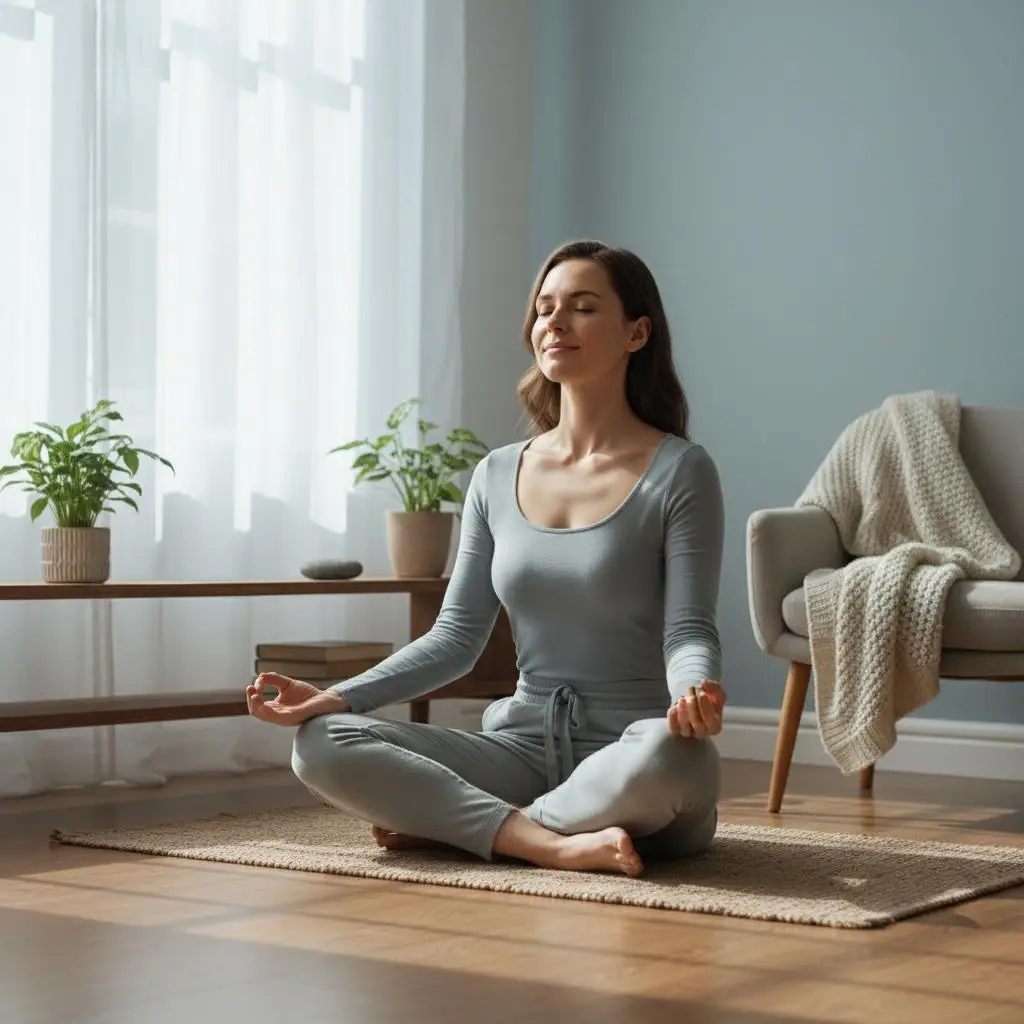
In a world that constantly pulls for our attention, finding a moment of quiet can feel like a luxury. This is where Mindfulness Therapy comes in—not as another task to add to your list, but as a gentle way to reconnect with yourself and navigate life’s challenges with greater ease. At its core, mindfulness therapy is a therapeutic approach that helps you pay attention to the present moment on purpose, without judgment.
It’s about noticing your thoughts, feelings, and bodily sensations as they are, right now. Instead of getting swept away by worries about the future or regrets about the past, you learn to anchor yourself in the present. This practice cultivates a stable and clear mind, creating a foundation for profound mental and emotional well-being.
So, how is this different from just meditating? It’s a common point of confusion. Think of it this way:
- Meditation is the specific practice, the exercise you do to train your attention. It’s like lifting weights at the gym. A guided meditation where you focus on your breath is a form of this practice.
- Mindfulness Therapy is the entire framework or program. It’s like the personal training plan that incorporates weightlifting (meditation) along with other exercises and knowledge to help you achieve your fitness goals. This therapy integrates mindfulness practices into a structured process to address specific psychological challenges like anxiety, stress, or depression.
Essentially, meditation is a tool used within the broader context of mindfulness therapy to help individuals develop the skills of present-moment awareness and apply them to their daily lives for therapeutic benefit.
How mindfulness supports emotional regulation and mental clarity
Have you ever reacted to a situation—snapping at a loved one or sending a hasty email—only to regret it moments later? This happens when there’s no space between a trigger and our reaction. Mindfulness helps create that space. By practicing, you develop the ability to pause and observe your internal state before acting on an impulse.
This pause is where the magic happens. It gives you the power of choice. Instead of being driven by an automatic emotional reaction, you can see the emotion for what it is—a temporary burst of energy and information—and decide how to respond wisely. This is the cornerstone of emotional regulation. You aren’t suppressing or ignoring your feelings; you’re relating to them with awareness and compassion, which stops them from controlling you.
Mental clarity is another significant benefit. Our minds often feel like a browser with too many tabs open. We jump from thought to thought, caught in loops of worry or planning. Mindfulness practice teaches you to notice this mental chatter without getting entangled in it. You learn to see your thoughts as passing events, like clouds drifting across the sky, rather than undeniable truths. This perspective shift reduces mental clutter and allows you to focus on what truly matters, leading to a calmer and more organized mind.
Quick practices you can use today
The beauty of mindfulness is that you don’t need a special cushion or a silent room to begin. You can integrate small, powerful practices into your day right now. Here are three simple exercises to get you started.
1-minute breath reset
This is your emergency brake for stressful moments. You can do it anywhere—at your desk, in a line, or before a difficult conversation.
- Stop what you’re doing and find a comfortable posture, either sitting or standing.
- Gently close your eyes or lower your gaze.
- Bring your full attention to the sensation of your breath. Notice the feeling of the air entering your nostrils and filling your lungs.
- Notice the feeling of the air leaving your body as you exhale.
- Stay with this for three to five full breaths. If your mind wanders, gently guide it back to the breath. That’s the entire practice.
5-minute body scan
This practice helps you reconnect with your body and release hidden tension. It’s especially useful when you feel disconnected or stuck in your head.
- Lie down on your back or sit comfortably in a chair.
- Close your eyes and take a few deep breaths to settle in.
- Bring your awareness to the toes on your left foot. Notice any sensations—warmth, tingling, pressure—without needing to change them.
- Slowly move your attention up your left leg, to your ankle, shin, knee, and thigh, simply observing the sensations in each part.
- Repeat the process with your right foot and leg.
- Continue moving your awareness through your torso, arms, hands, neck, and face.
- Spend about 30 seconds on each body part. If you notice tension, just acknowledge it and breathe into it without judgment.
Mindful walking
Turn a routine activity into a grounding practice. You can do this on your way to get coffee, walking to your car, or simply pacing in a room.
- As you begin to walk, bring your attention to the soles of your feet.
- Feel the sensation of one foot lifting off the ground and the other making contact with it. Notice the pressure and the connection.
- Slow your pace slightly to fully experience the physical act of walking.
- Expand your awareness to include the feeling of the air on your skin and the sounds around you.
- When your mind wanders, gently bring it back to the sensation of walking.
A 10-minute daily routine for steady progress
Consistency is more important than duration. Committing to just 10 minutes a day can create a significant positive shift over time. This simple routine for 2025 and beyond provides structure without being overwhelming. Try to do it at the same time each day to build a habit.
| Time | Activity | Focus |
|---|---|---|
| Minutes 0-2 | Settling In | Find a comfortable seated position. Take three deep, cleansing breaths, and on the last exhale, let your breath return to its natural rhythm. |
| Minutes 2-5 | Breath Awareness | Place your attention on the physical sensation of breathing. Notice where you feel it most—the nostrils, the chest, or the abdomen. Just rest your awareness there. |
| Minutes 5-8 | Body or Sound Awareness | Shift your focus. Either do a mini body scan (awareness in hands, feet, face) or open your awareness to the sounds around you. Notice sounds without labeling them as “good” or “bad.” |
| Minutes 8-9 | Open Awareness | Let go of any specific focus. Simply sit and notice whatever comes into your awareness—thoughts, feelings, sensations—without holding on to anything. |
| Minutes 9-10 | Gentle Return | Bring your attention back to the feeling of your body in the chair. Wiggle your fingers and toes. When you’re ready, gently open your eyes. Set a simple intention for your day, like “I will be present.” |
Applying mindfulness to anxiety and low mood without clinical jargon
When you’re feeling anxious, your mind is often racing with “what if” scenarios. Anxiety is future-oriented. Mindfulness anchors you in the present, which is often much safer than the future your mind has created. When you notice an anxious thought, instead of believing it or fighting it, you can simply label it: “Ah, there is a thought about work.” By observing it as a thought, you create distance and it loses some of its power. Grounding yourself in physical sensations—the feeling of your feet on the floor, the weight of your body—provides a stable anchor in the here and now.
When experiencing a low mood, we often get stuck ruminating on past events or negative self-judgments. This creates a downward spiral. Mindfulness helps interrupt this cycle. By shifting your attention to a neutral sensation, like your breath or the sound of birds outside, you gently unhook your mind from the loop of rumination. It’s not about forcing yourself to feel happy; it’s about giving your mind a break from the patterns that deepen the low mood, creating space for a natural lift to occur.
Common obstacles and gentle adjustments
Starting a mindfulness practice is not always easy. Your mind will wander, you might feel restless, or you may even fall asleep. This is completely normal. The goal of Mindfulness Therapy isn’t to have a perfectly silent mind, but to become aware of where your mind goes and gently guide it back.
- “My mind is too busy.” This is the most common experience. Your brain’s job is to think. The practice isn’t to stop thoughts, but to change your relationship with them. Each time you notice your mind has wandered and you bring it back, you are strengthening your attention muscle. Celebrate that moment of awareness.
- “I feel sleepy.” If you find yourself dozing off, especially during body scans, that’s okay. It might mean you’re sleep-deprived. Try practicing in an upright, dignified posture rather than lying down. You could also practice at a time of day when you’re naturally more alert.
- “I feel restless or bored.” These feelings are just more things to notice. Instead of fighting restlessness, can you get curious about it? Where do you feel it in your body? What does boredom feel like? Observing these states without judgment is an advanced part of the practice.
The key is self-compassion. Treat yourself with the same kindness you would offer a friend who is learning a new skill.
When mindfulness works best alongside other therapies
While Mindfulness Therapy is a powerful tool, it’s not always a standalone solution, especially for complex mental health conditions. It works exceptionally well as a complementary approach alongside established therapies like Cognitive Behavioral Therapy (CBT).
For example, in CBT, you learn to identify and challenge unhelpful thought patterns. Mindfulness gives you the practical skill to notice those thoughts as they arise in real-time, creating the necessary pause to apply your CBT techniques. It provides the “how” for managing the “what” that is often uncovered in talk therapy.
It is always advisable to consult with a qualified mental health professional to determine the best course of treatment for your unique situation. They can help you integrate mindfulness in a way that is safe and effective, ensuring it supports your overall therapeutic goals. Think of mindfulness as one vital tool in a comprehensive mental wellness toolkit.
Short evidence snapshots that matter to readers
The benefits of mindfulness are not just anecdotal; they are backed by a growing body of scientific research. For those interested in the data, numerous studies highlight how mindfulness practices can change the brain and improve well-being.
- Stress Reduction: One of the most well-documented benefits is a significant reduction in perceived stress. Programs like Mindfulness-Based Stress Reduction (MBSR) have been shown to lower cortisol levels, the body’s primary stress hormone.
- Improved Focus: Regular mindfulness practice strengthens the prefrontal cortex, the area of the brain responsible for attention and decision-making. This leads to better concentration and less mind-wandering.
- Emotional Resilience: Research using brain imaging shows that mindfulness can decrease activity in the amygdala, the brain’s “fear center,” while increasing connections between the amygdala and the prefrontal cortex. This helps individuals respond to stressors more thoughtfully rather than reactively.
For a deeper dive into the science, the Mindfulness research repository is an excellent resource for peer-reviewed studies.
Guided 8-minute session script to follow along
Find a comfortable and upright position, either on a chair with your feet flat on the floor or on a cushion. Allow your hands to rest in your lap. You can gently close your eyes or lower your gaze to a spot a few feet in front of you.
(Minute 1-2: Settling)
Begin by taking three slow, deep breaths. Breathe in through your nose, and sigh the breath out through your mouth. On the third exhale, allow your breath to find its own natural, easy rhythm. Bring your awareness to the physical points of contact… your feet on the floor, your body on the chair. Feel the gentle pull of gravity.
(Minute 2-4: Breath Awareness)
Now, bring your attention to the sensation of your breath. Don’t try to change it in any way. Simply notice it. You might feel the cool air at the tip of your nose as you inhale, and the warm air as you exhale. Or perhaps you feel the gentle rise and fall of your chest or belly. Rest your full attention on this simple, repetitive sensation. Your mind will wander. When it does, just gently and kindly notice that it has, and then guide your focus back to the breath.
(Minute 4-6: Body Awareness)
Let your awareness expand to include your entire body. Notice the posture you are holding. Feel the sensations in your hands… perhaps warmth, tingling, or coolness. Bring a gentle awareness to your shoulders. Are they tense? If so, just notice that without needing to fix it. Simply be aware of the physical landscape of your body as you sit here, breathing.
(Minute 6-7: Sound Awareness)
Now, let your awareness open up even further to include the world of sound. Notice the sounds around you. The hum of a computer, a voice in another room, the sound of traffic. Listen to these sounds without judgment, as if they were music. Just let them arise and pass away without getting caught up in stories about them.
(Minute 7-8: Returning)
Bring your attention back to the feeling of your breath, and then back to the feeling of your body in the chair. Notice the solidness of the floor beneath your feet. When you feel ready, begin to wiggle your fingers and toes. Slowly and gently, open your eyes, taking in the room around you. Take a moment to notice how you feel before jumping into your next activity.
Further reading and practice resources for continued growth
Your journey with Mindfulness Therapy is a personal one, and there are many excellent resources to support your continued learning and practice. These organizations provide reliable, evidence-based information to guide you.
- American Psychological Association (APA): The APA offers a comprehensive overview of mindfulness, its psychological benefits, and its application in various therapeutic settings.
- National Institute of Mental Health (NIMH): As a leading authority on mental wellness, the NIMH provides information on various mental health conditions and the role that practices like mindfulness can play in a treatment plan.
- Center for Mindfulness at UMass Chan Medical School: This is the home of the renowned Mindfulness-Based Stress Reduction (MBSR) program. Their site offers information on the program’s structure, history, and the research that supports it.
Exploring these resources can deepen your understanding and provide you with structured ways to continue building your mindfulness skills. Remember to be patient and compassionate with yourself as you practice. This is not a race, but a gentle unfolding of awareness, one moment at a time.